The Dave Brubeck Quartet
The Dave Brubeck Quartet
Group from United States
Genres: jazz, cool jazz, instrumental, piano, jazz piano
Similar artists via Last.fm
 Dave Brubeck
About The Dave Brubeck Quartet
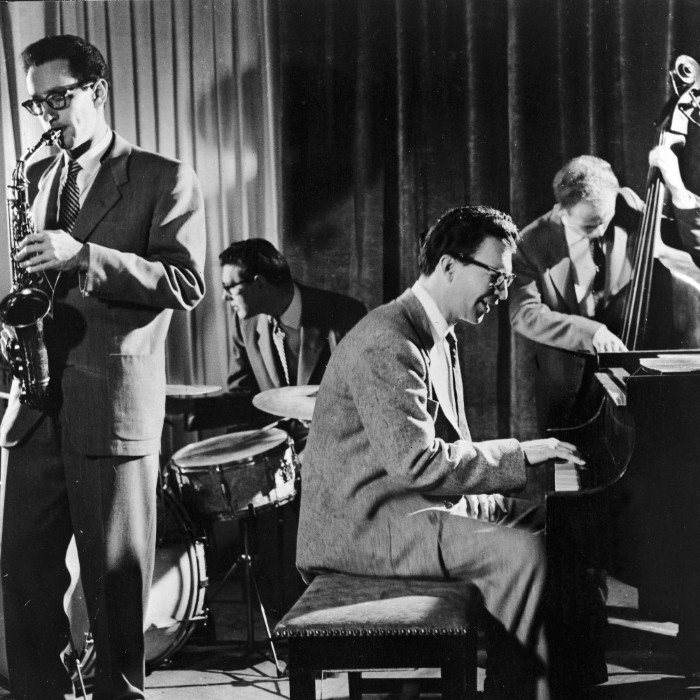
The The Dave Brubeck Quartet was one of the most influential groups in modern jazz, formed in San Francisco in 1951 by pianist and composer Dave Brubeck. In what became known as the band's classic line-up, the band featured ** Piano: Dave Brubeck (1920–2012) ** Saxophone: Paul Desmond (1924-1977) ** Bass: Eugene Wright (1923-2020) ** Drums: Joe Morello (1928–2011) Emerging during a period when jazz was rapidly evolving beyond swing and bebop, the quartet became a defining force in what came to be known as cool jazz, blending classical influences, unusual rhythmic structures, and an accessible melodic sensibility. Origins and early development Brubeck’s musical direction was shaped early on by his classical training and his studies with French composer Darius Milhaud at Mills College. Milhaud encouraged him to incorporate polytonality and complex structures into jazz, something that would later become a hallmark of the quartet’s sound. Before forming the quartet, Brubeck led the Dave Brubeck Octet, an experimental ensemble that explored unconventional harmonies and time signatures but struggled commercially. After its dissolution, Brubeck refined his approach into a smaller group format that balanced experimentation with broader appeal. By the early 1950s, the quartet began gaining attention through extensive touring, particularly on college campuses across the United States, where they built an unusually young and diverse audience for jazz. Classic lineup and musical identity The quartet’s most celebrated lineup solidified in the mid-1950s with alto saxophonist Paul Desmond, bassist Eugene Wright, and drummer Joe Morello. Each member brought a distinct voice: Desmond’s lyrical, airy tone became central to the group’s identity. Wright provided a steady, understated rhythmic foundation. Morello contributed technical precision and a deep interest in rhythmic experimentation. The interplay between Brubeck’s often percussive, chordal piano style and Desmond’s smooth melodic lines created a recognizable contrast that defined the quartet’s sound. Breakthrough and “Time Out” The group achieved international fame with the 1959 album Time Out, released by Columbia Records. At a time when jazz was typically written in 4/4 time, Time Out boldly explored unusual meters such as 5/4, 9/8, and 6/4. The album’s most famous track, Take Five—composed by Desmond—became one of the best-selling jazz singles of all time and remains a gateway into jazz for many listeners. Another standout, Blue Rondo à la Turk, was inspired by Turkish street rhythms Brubeck encountered while touring, reflecting the quartet’s growing interest in global musical influences. Time series and global influences Following Time Out, the quartet continued exploring rhythm with albums such as Time Further Out (1961) and Time Changes (1964). These recordings pushed rhythmic experimentation even further, incorporating shifting meters and polyrhythms while maintaining strong melodic hooks. Brubeck’s travels—often sponsored by the U.S. State Department during the Cold War—played a crucial role in shaping the group’s music. Tours through Europe, the Middle East, Asia, and Eastern Europe exposed the quartet to non-Western musical traditions, which they incorporated into their compositions. This cross-cultural approach made them not only musical innovators but also informal cultural ambassadors. Social impact and touring The quartet was notable for maintaining an integrated lineup during a period of racial segregation in the United States. Eugene Wright, an African American musician, remained with the group despite pressure from some promoters to replace him. Brubeck refused, even at the cost of canceled performances, reinforcing the group’s ethical stance alongside its musical achievements. Their popularity extended far beyond traditional jazz audiences. The quartet was one of the first jazz groups to achieve mainstream success in large concert halls and on college circuits, and they appeared on the cover of Time in 1954—an unusual honor for a jazz musician at the time. Disbandment and later years The original quartet disbanded in 1967 as Brubeck sought to focus more on composition, including orchestral and choral works such as his oratorio The Light in the Wilderness. Although he continued to perform and record with various ensembles, the classic quartet lineup was never permanently reassembled. Paul Desmond continued a successful solo career before his death in 1977, while Morello and Wright remained respected figures in jazz. Brubeck himself continued performing well into his later years, often collaborating with his sons and revisiting the quartet’s repertoire. Legacy The Dave Brubeck Quartet’s influence lies in its ability to make complex musical ideas accessible without diluting them. Their integration of classical structures, unconventional rhythms, and global influences helped expand the boundaries of jazz and paved the way for later experimentation in both jazz and progressive music. Today, their recordings—especially Time Out—remain essential listening, and compositions like “Take Five” continue to be among the most recognized pieces in jazz history.
Taken from Last.fm
1,112,950 listeners · 13,013,531 plays via Last.fm