Ferruccio Busoni
Ferruccio Busoni - Italian composer, pianist, conductor, editor, writer, and teacher
Person from Italy
Genres: Classical, piano, composer, italian, romantic
Similar artists via Last.fm
 Leopold Godowsky
About Ferruccio Busoni
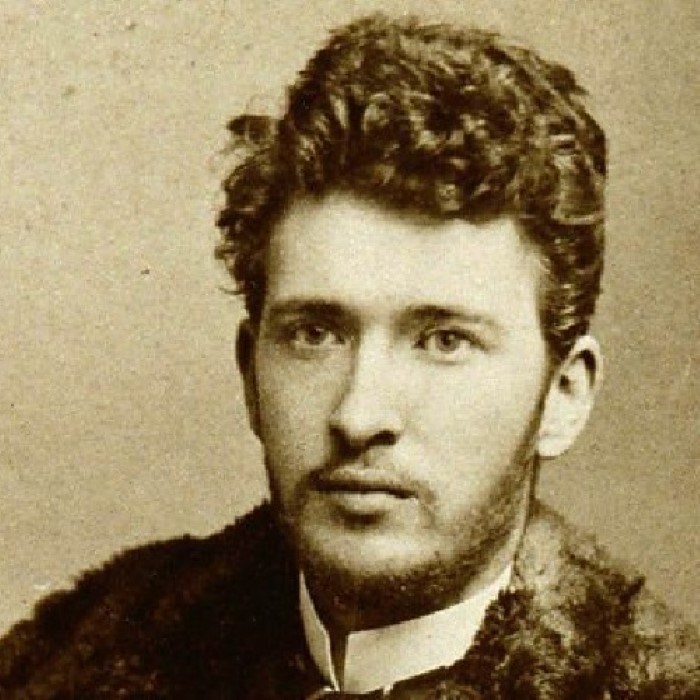
Ferruccio Busoni (April 1, 1866 – July 27, 1924) was an Italian composer, pianist, music teacher and conductor. The majority of Busoni's works are for the piano. Busoni's music is typically contrapuntally complex, with several melodic lines unwinding at once. Although his music is never entirely atonal in the Schoenbergian sense, his later works are often in indeterminate key. In the program notes for the premiere of his Sonatina seconda of 1912, Busoni calls the work senza tonalità (without tonality). Johann Sebastian Bach and Franz Liszt are often identified as key influences, though some of his music has a neo-classical bent, and includes melodies resembling Mozart's. Some idea of Busoni's mature attitude to composition can be gained from his 1907 manifesto, Sketch of a New Aesthetic of Music, a publication somewhat controversial in its time. As well as discussing then little-explored areas such as electronic music and microtonal music (both techniques he never employed), he asserted that music should distill the essence of music of the past to make something new. Many of Busoni's works are based on music of the past, especially on the music of Johann Sebastian Bach. He arranged several of Bach's works for the piano, including the famous Toccata and Fugue in D Minor (originally for organ) and the chaconne from the D minor violin partita. To create a viable work for Romantic piano from an original solo violin piece required a person of Busoni's boldness, inexorable feeling for musical geometry (which requires an in-depth knowledge of integrating chord structures together by parts), and distinctive sonority. Earlier Brahms had also made a transcription of the same chaconne, but for left hand only. Thus some consider him an originator of neoclassicism in music. The first version of Busoni's largest and best known solo piano work, Fantasia Contrappuntistica, was published in 1910. About half an hour in length, it is essentially an extended fantasy on the final incomplete fugue from Bach's The Art of Fugue. It uses several melodic figures found in Bach's work, most notably the BACH motif (B flat, A, C, B natural). Busoni revised the work a number of times and arranged it for two pianos. Versions have also been made for organ and for orchestra. Busoni used elements of other composers' works. The fourth movement of An die Jugend (1909), for instance, uses two of Niccolò Paganini's Caprices for solo violin (numbers 11 and 15), while the 1920 piece Piano Sonatina No. 6 (Fantasia da camera super Carmen) is based on themes from Georges Bizet's opera Carmen. Busoni was a virtuoso pianist, and his works for piano are difficult to perform. The Piano Concerto (1904) is probably the largest such work ever written. Performances generally last over seventy minutes, requiring great stamina from the soloist. The concerto is written for a large orchestra with a bass choir that is hidden from the audience's view in the last movement. Busoni's suite for orchestra Turandot (1904), probably his most popular orchestral work, was expanded into his opera Turandot in 1917, and Busoni completed two other operas, Die Brautwahl (1911) and Arlecchino (1917). He began serious work on his best known opera, Doktor Faust, in 1916, leaving it incomplete at his death. It was then finished by his student Philipp Jarnach, who worked with Busoni's sketches as he knew of them, but in the 1980s Anthony Beaumont, the author of an important Busoni biography, created an expanded and improved completion by drawing on material that Jarnach did not have access to. Busoni made a considerable number of piano rolls, and a small number of these have been re-recorded onto vinyl record or CD. His recorded output on gramophone record is much smaller and rarer - unfortunately many were destroyed when the Columbia factory burnt down. Originally, he had recorded a considerable number, including Liszt's Sonata in B minor and Beethoven's Hammerklavier Sonata. The following pieces (recorded for Columbia) survive from February 1922: Prelude & Fugue No. 1 (Bach) Etude Op. 25 No. 5 (Chopin) Chorale Prelude "Nun freut euch liebe Christen" (Bach-Busoni) Ecossaisen (Beethoven) Prelude Op. 28 No. 7 & Etude Op. 10 No. 5 (Chopin) the two works are connected by an improvisatory passage Etude Op. 10 No. 5 (Chopin) Nocturne Op. 15 No. 2 (Chopin) Hungarian Rhapsody No. 13 (Liszt) this has substantial cuts, to fit it on two sides of a 78 record. Busoni also mentions recording the Gounod-Liszt Faust Waltz in a letter to his wife in 1919. However, this recording was never released. Unfortunately for posterity, Busoni never recorded his original works.
Taken from Last.fm
39,048 listeners · 223,956 plays via Last.fm