The Sisters of Mercy
The Sisters of Mercy
Group from United Kingdom
Genres: Gothic Rock, post-punk, Gothic, 80s, goth
Similar artists via Last.fm
 The Mission
About The Sisters of Mercy
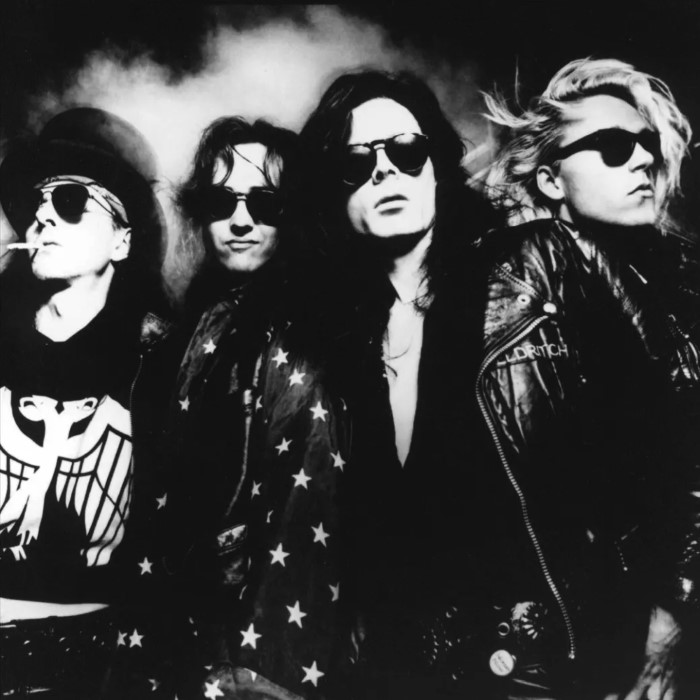
The Sisters of Mercy are an English rock band formed in Leeds in 1980. After achieving early underground recognition, the group reached wider commercial success in the mid-1980s and remained active until the early 1990s, when they stopped releasing new recordings amid a dispute with their record company. The band has continued primarily as a touring act, performing both established and unreleased material live. The band released three studio albums: "First and Last and Always" (1985), "Floodland" (1987), and "Vision Thing" (1990). Each album featured a different lineup. Vocalist Andrew Eldritch and the drum machine known as Doktor Avalanche have been the only consistent elements. Eldritch also participated in the related project the Sisterhood. Recording activity ceased in the early 1990s due to a contractual dispute with East West Records, which held a contract with Eldritch rather than the band as a whole. Under the terms, Eldritch owed two albums; the agreement was later settled when he delivered material under the name SSV in 1997. The resulting album, "Go Figure", was not officially released, although unofficial versions have circulated. Since then, the band has not signed with another label or issued new studio recordings, but has continued to perform live. Former members later formed the bands Ghost Dance and the Mission. The group was founded by Gary Marx and Andrew Eldritch. Early lineups were unstable, but by 1981 a more consistent formation emerged with Craig Adams on bass and the introduction of the drum machine Doktor Avalanche, allowing Eldritch to focus on vocals. Early releases included the single "Damage Done/Watch/Home of the Hit-men" and later "Body Electric" backed with "Adrenochrome". Their independent singles charted in the UK, and early recordings such as "Alice" and the EP "Reptile House" contributed to their underground reputation. Live performances frequently included cover versions, including songs such as "Sister Ray", "Ghostrider", and "Louie Louie". A limited number of covers were recorded and released as B-sides, including "1969", "Gimme Shelter", "Emma", and "Knockin' on Heaven's Door". Following the success of "Temple of Love" in 1983, the band signed with WEA. Lineup changes continued, including the departure of Ben Gunn and the addition of Wayne Hussey. The debut album "First and Last and Always" was recorded during a period of internal tension. After its release, Gary Marx left the band, and the group completed its tour before effectively dissolving that lineup. Subsequently, Eldritch relocated to Hamburg and worked with new collaborators, including Patricia Morrison. Meanwhile, Hussey and Adams formed a new group initially using the name the Sisterhood, which led to a naming dispute. Eldritch released material under the same name, including the album "Gift" and the single "Giving Ground", after which Hussey’s group adopted the name the Mission. Eldritch then recorded "Floodland", marking a stylistic shift toward a more keyboard-driven sound. The album included the single "This Corrosion", as well as "Dominion" and "Lucretia My Reflection". The band did not tour during this period but appeared in promotional performances and videos, some of which were compiled in the video release "Shot". A new lineup emerged for "Vision Thing" (1990), featuring Andreas Bruhn, Tony James, and Tim Bricheno. The album represented a return to a more guitar-oriented style. The band undertook a world tour from 1990 to 1991. A planned North American tour with Public Enemy was partially canceled. Ongoing tensions with their record company contributed to further instability. In 1992, the band re-recorded "Temple of Love" to promote the compilation "Some Girls Wander By Mistake". The final releases of this period included the single "Under the Gun" and the compilation "A Slight Case of Overbombing" (1993), along with the video collection "Shot Rev 2.0". These marked the last commercial recordings for several decades. After their final concerts in 1993, Eldritch described the band’s inactivity as a form of protest against East West Records. The contractual dispute was eventually resolved in 1997 with the submission of the unreleased SSV material. The band resumed live performances in 1996 and has since maintained regular touring activity with changing lineups. Guitarists such as Chris Catalyst and Ben Christo joined in the 2000s, and the band has continued to perform internationally. Later lineup changes included the addition of Dylan Smith and other touring members. Although reissues of the three studio albums were released in 2006, the band has not issued new studio recordings since 1993. Eldritch has stated in interviews that he has not prioritized releasing new material. Despite this, the band has introduced a number of new songs in live performances since the 2010s, including "There's a Door", "Don't Drive on Ice", "I Will Call You", "Show Me (On the Doll)", "When I'm on Fire", "On the Beach", "But Genevieve", "She's a Monster", "Here", and "Quantum Baby". None of these have been released in studio form. The Sisters of Mercy continue to tour and perform, remaining active as a live act without recent official recordings. Full Wikipedia article: https://en.wikipedia.org/wiki/The_Sisters_of_Mercy Studio albums First and Last and Always (1985) Floodland (1987) Vision Thing (1990)
Taken from Last.fm
479,410 listeners · 17,261,397 plays via Last.fm